| Soybean Rust (1 Feb 2006) |
 |
| In 2005, specialists throughout the South found that soybean
rust could be a significant problem but it was not the pandemic
outbreak many were expecting. For example, in Alabama it was
found that one field might be severely infected and a total loss
while another just down the road experienced little infection until
very late in the season. This of course is in contrast to the
widespread destruction of adjacent fields observed throughout
Brazil. I personally attribute the random nature of occurrence
to a lower viable spore reservoir and less than ideal development
conditions.
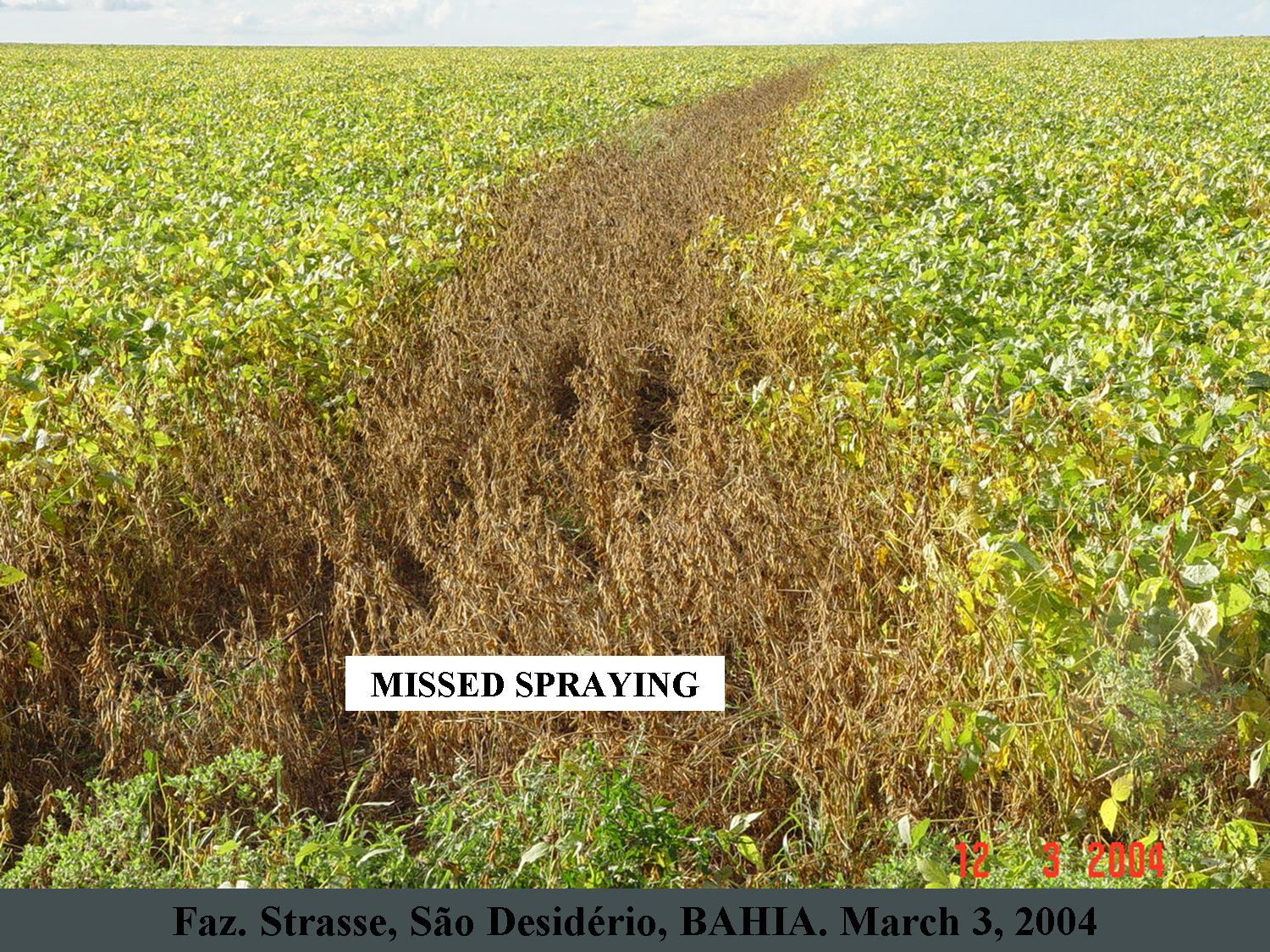
Based on these observations, my predictions for the occurrence of soybean rust in Illinois are that we have a 50/50 chance of seeing it in Central Illinois in 2006 and about a 10 to 20 percent chance of seeing it in any one field. I do believe that it is highly likely that we will be able to forecast its arrival in our area in time to make appropriate treatments. However, I also believe that when it does come a good number of fields will be lost to rust due to a failure to recognize it presence earlier enough (didn't scout). My recommendation is that fields should be scouted once a week after flowering begins. Look at the lower, older leaves for the rust infection. If fields within a 50 mile distance have been diagnosed with rust I recommend scouting twice per week after flowering. Your scouting trips should take you through the bulk of the field. I recommend walking throughout the length of the field by mentally dividing the field into thirds lengthwise, and then walking along one of those division lines to the farm end and then walking back along the other division line to the point of origination. Stop to pull and examine leaves at about 10 points along the way. If you are planting soybeans on rows 15 inches or narrower you should seriously consider leaving yourself a scout path in each field. You can do this when planting by moving over the width of a tractor wheel with the planter and tractor to give yourself (or the scout) a 30" row down which to walk. At least two of these scout paths should be available in each soybean field (one to walk down on and the other to walk back on, 1/3rd and 2/3rds the way into the field). After about the 15th of July narrow row soybeans are nearly impossible to walk through unless such scout paths are left in the field. This can make a big difference in your ability to detect pests and it will not decrease yields. Dr. D Pike |