Soybean Aphid (1 Feb 2006)
 Soybean aphid populations will depend on availability of buckthorn, predator
populations (Asian Ladybird beetles) in the fall and in the spring, as well as
weather conditions. The soybean aphid feeds on soybeans by sucking fluid
from young stems or leaves and the underside of older leaves, stems, or
pods. Not only can soybean aphids reduce yield, they also can cause a
reduction in soybean quality. Soybean aphids may cause beans to be smaller
and to contain less oil.
Soybean aphid populations will depend on availability of buckthorn, predator
populations (Asian Ladybird beetles) in the fall and in the spring, as well as
weather conditions. The soybean aphid feeds on soybeans by sucking fluid
from young stems or leaves and the underside of older leaves, stems, or
pods. Not only can soybean aphids reduce yield, they also can cause a
reduction in soybean quality. Soybean aphids may cause beans to be smaller
and to contain less oil.
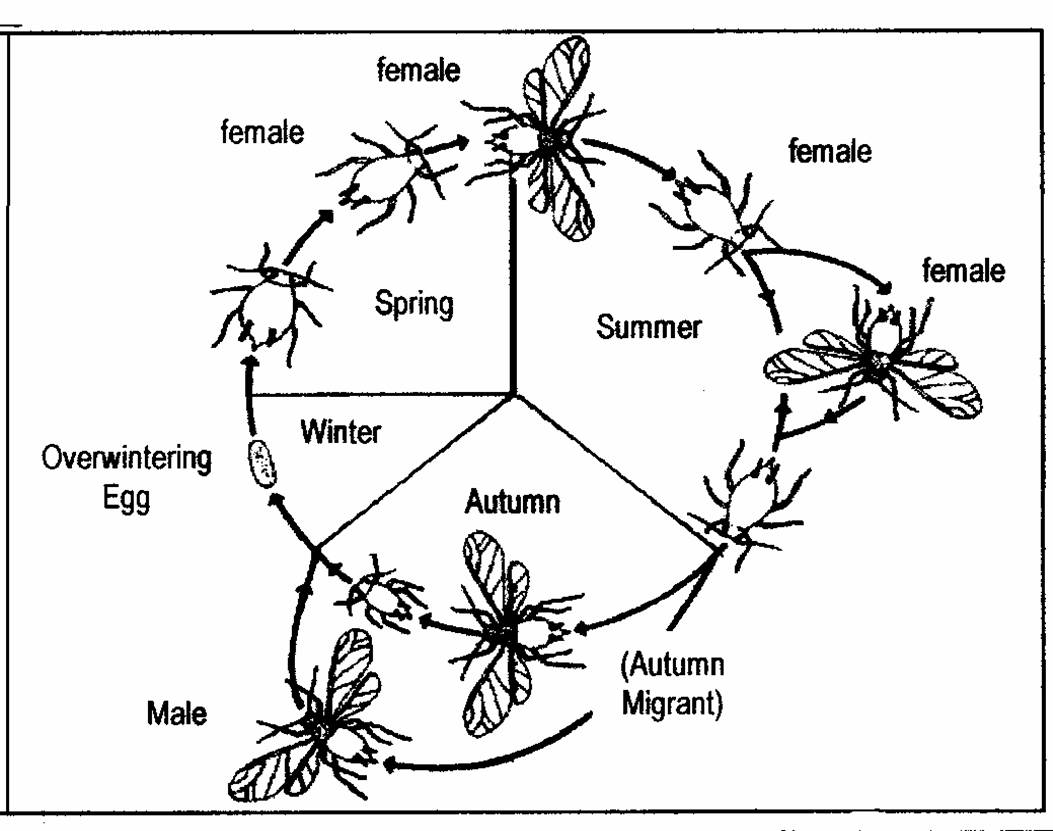
In the fall, soybean aphids reproduce sexually and deposit eggs on buckthorn, where they overwinter. In the spring, winged soybean aphids fly or are blown by weather patterns from the buckthorn to soybean fields. The soybean aphid will continue to produce more wingless and winged adults on soybeans. Thousands of them can seem to appear “out of the blue” or overnight. Soybean aphids have been known to go from 250 to 800 per plant in just a few days. This is because the soybean aphid reproduces asexually in the spring and summer. In other words, a mother clones herself to produce many pregnant female offspring. Soybean aphid reproduction mainly occurs during the soybean’s vegetative state.
The soybean aphid can cause economic loss from the late vegetative stages through the reproductive stages. Pesticide treatment is justified if aphids exceed thresholds near or during the reproductive stages or during pod-fill. Treatment is not necessary after the R6 growth stage. The broad spectrum insecticides such as organophosphates or pyrethoids provide good results against the soybean aphid. However, the downfall is that
these insecticides also kill the beneficial insects or predators of the soybean aphid. Therefore, there may be an increased risk of a soybean aphid outbreak after a broad spectrum insecticide application so timing and correct monitoring are important.
Soybeans should be scouted every week for aphids and it is important that you walk throughout the field and not just the borders. The economic threshold has been set at 250 aphids per plant. Although that may sound like a lot of aphids there is actually no real damage to the plants until the numbers reach about 2000 per plant. However, as indicated above, soybean aphids populations can double every 2 days under good conditions and will double every three days under less favorable conditions. Therefore, the 250 aphid per plant 'action' threshold gives you 6 or 7 days in which to apply a treatment to prevent them from reaching the damaging level. Considering weather, spray conditions, and the availability of equipment and materials, seven days is probably a practical goal.