European Corn Borer (1 Feb 2006)
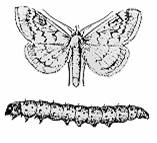
In the early spring, when temperatures reach about 50 degrees, the corn borer larvae that have overwintered in corn stalks, plant debris, or soil will pupate. These first generation females will lay their eggs on corn or other grass hosts. The eggs will hatch in 5 to 7 days and the larvae will feed on the leaves of corn and chew small holes in the leaf forming a “buckshot” pattern when the leaf is unrolled. As the larvae mature, they will begin to tunnel into the leaf midribs and sheaths. As they grow larger, the larvae will tunnel into the stalk and feed until they are full grown. The tunneling in the stalk stops the transfer of water and nutrients thus causing a yield reduction and lodging. These wounds can also act as entry points for diseases. In 8 to 10 days after pupation, the corn borer larvae will develop into moths. The moths will gather in humid, grassy (about 18 inches tall) areas to mate, rest, and drink. Later, the second generation of moths will lay their eggs when corn is near tasseling. Most of the second generation ECB eggs can be found two leaves above and below the ear on the underside of the leaf near the midrib.
Early planted or taller corn will be the most susceptible to first generation corn borer. Corn planted later or smaller corn (about seventeen or eighteen inches tall) produces a compound known as DIMBOA. This compound tastes bad to a corn borer, and therefore prevents the establishment of the corn borer. As the corn plant matures, the concentration of DIMBOA within the plant will decrease, therefore, the plant will become more susceptible to the corn borer.
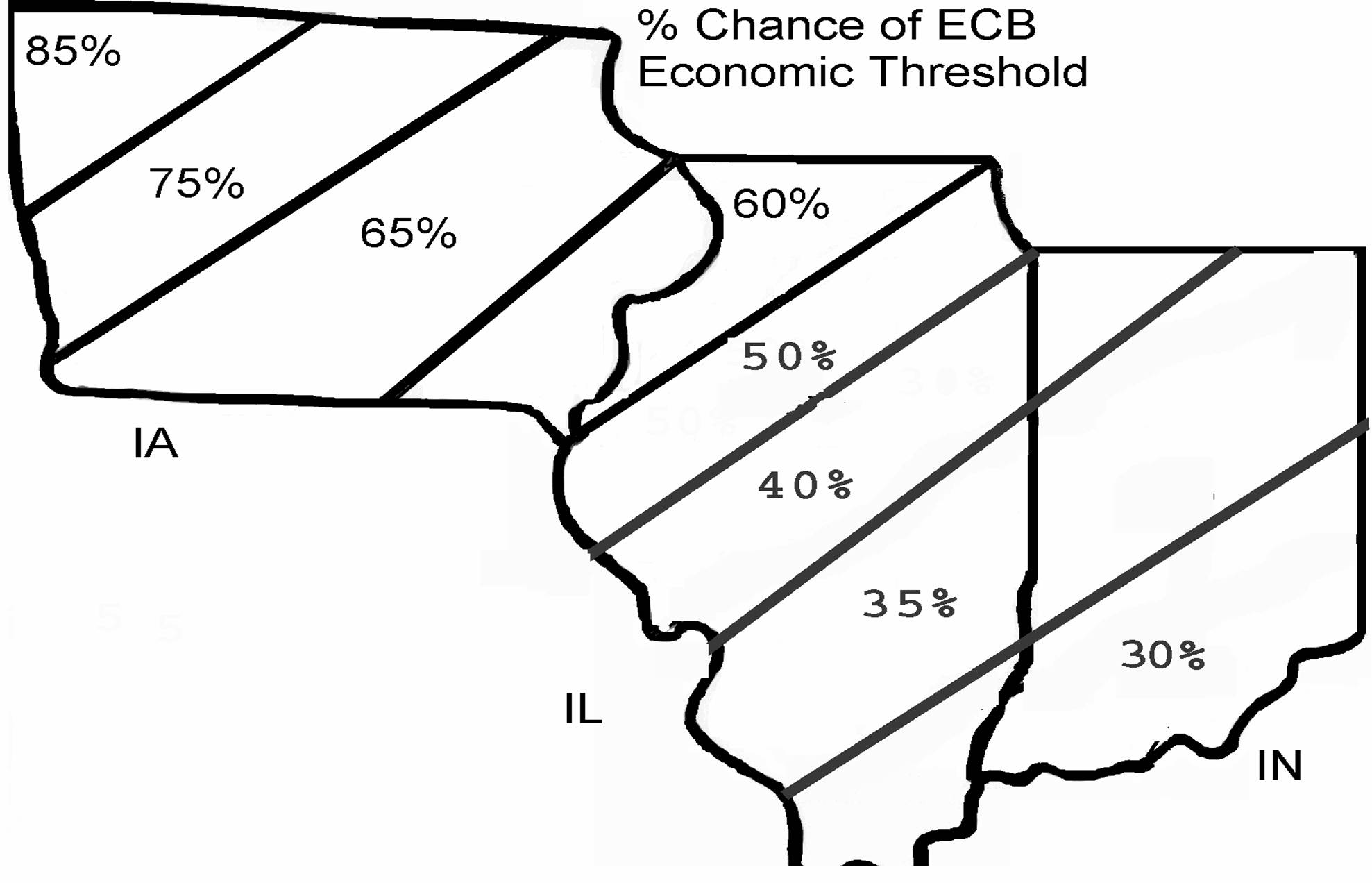
It is difficult to predict if the corn borer will have a severe infestation from year to year. It
seems that in the past several years, populations have decreased in most areas, however there are still “pockets” of increased infestations in the Midwest. Scouting is key when determining management of the European Corn Borer.
In 1996, BT hybrids were introduced for protection against the corn borer. Since then, the use of the corn borer BT protected hybrids has steadily increased in the United States. Surveys from the last seven years have indicated a definite reduction of ECB densities. Experts are now saying that they may have “underestimated the impact of BT hybrids on populations of the ECB across the Midwest.”
With the 2003 introduction of Bt rootworm protected corn and the possibility of European import restrictions of BT corn being eliminated, the use of Bt hybrids is expected to sky rocket over the next several years in the United States and around the world. Experts warn that relying too heavily on this pest management strategy may lead to insect resistance to Bt hybrids.