Bean Leaf Beetle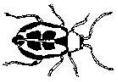 (1 Feb 2006)
This small beetle can be easily recognized by the black triangle found behind the head on the top of the its wings. However, other characteristics of this insect may vary considerably. The beetle can be green, yellow, tan or red. Also, a beetle may or may not have black spots and border on its wings.
Bean leaf beetles overwinter as adults throughout the Midwest, mainly on leaf litter near soybean fields, however, a few may overwinter on soybean residue, alfalfa, corn, and grassy areas. Bean leaf beetles will emerge in early spring and may be seen first in alfalfa. Because they have a strong preference for soybeans, they rapidly move to the emerging soybeans to feed and lay eggs (130-200) on the upper surface of the soil near soybean plants. The eggs hatch within a week and the larvae feed on roots. They emerge as second generation in late summer. When fall temperatures cool down, the second generation will find overwintering sites.
The bean leaf beetle is most commonly known for transmitting the Bean Pod Mottle Virus (BPMV). It has been reported that the soybean plant is most at risk for this virus when infected as a seedling. Symptoms such as: yellow-green mottling and distortion of upper leaves are most visible during cool temperature and rapid growth. BPMV is reported to cause a reduction in size and number of seed, susceptibility to Phomopsis seed infection, and be associated with green stem syndrome.
The first generation of bean leaf beetles will flock to the earliest planted soybean fields. Early feeding of the cotyledons may prevent the establishment of the unifoliate leaves and the plant can die. The second generation may cause the most damage by eating soybean pods during the podfill growth stage.